

Shooting drills
15 exercises, with videos, printable targets and published scoring.
Printable targets for these drills
Videos, printable targets and beginner guides in one place: Training
Find an exercise
3 of 15 exercises
About the levels
- Beginner
- Simple, single-focus formats and introductory references.
- Intermediate
- Exercises combining target changes, reloads or several short stages.
- Advanced
- Longer courses or tests with demanding published time and accuracy requirements.
USA Arms editorial levels describe the exercise, not a shooter's qualification.
No exercises match. Try fewer search words, choose another level or practice focus, or clear the filters.
- Intermediate Accelerator Drill
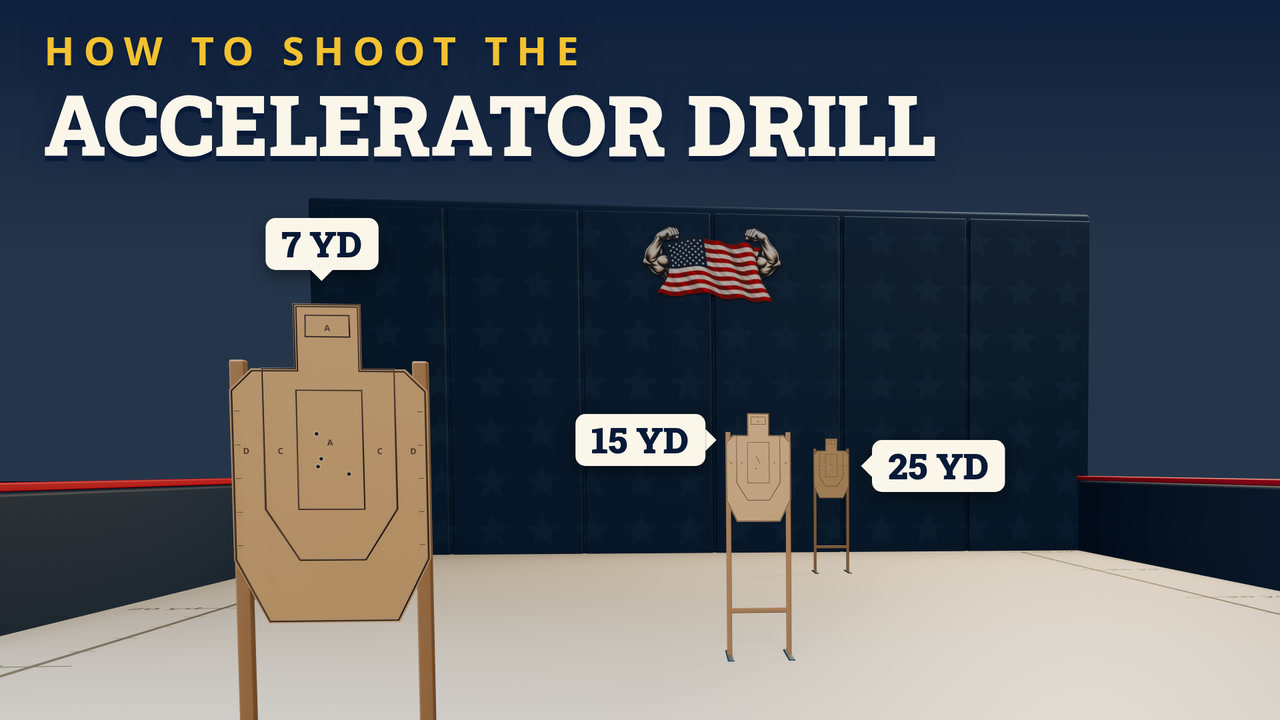 0:51
Twelve rounds across three distances, with a reload halfway. Ben Stoeger published the Accelerator to practice changing pace between near and far targets.
- Illustrated distances
- 7, 15 and 25 yards
- Illustrated rounds
- 12; one reload
- Beginner Bill Drill
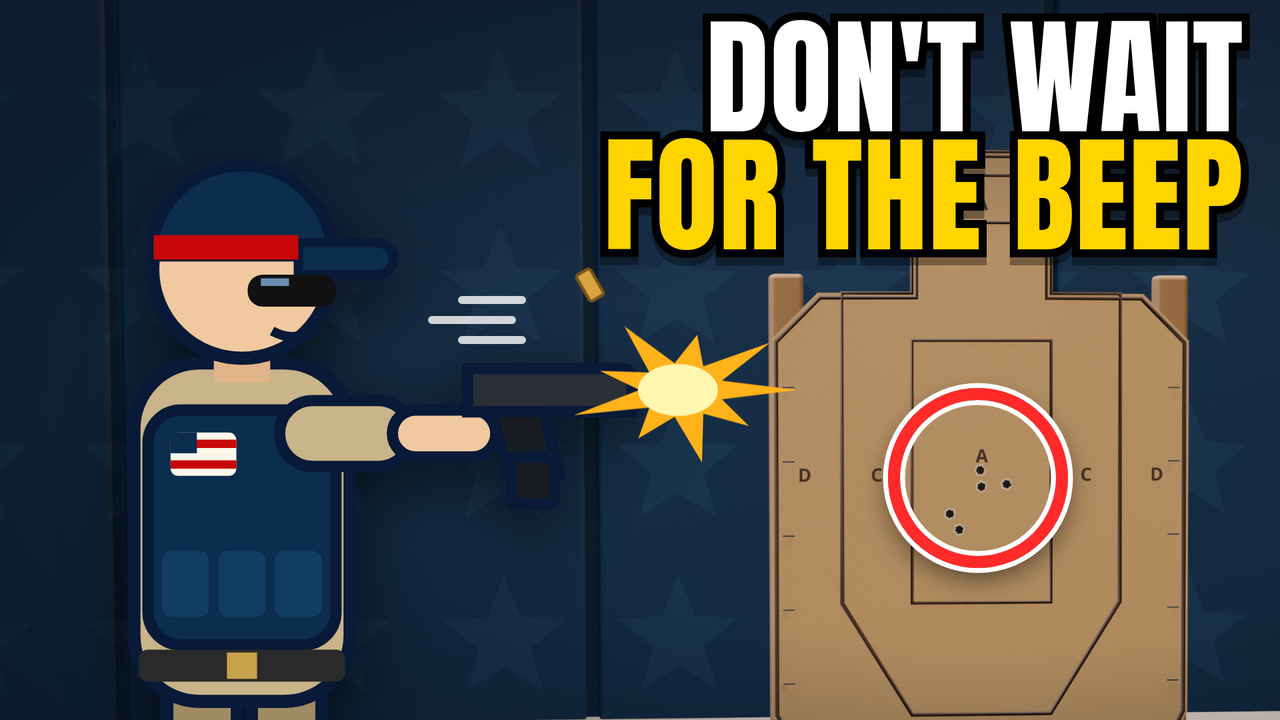 0:59
Six shots on one target, usually at seven yards. The Bill Drill records the first shot, the intervals that follow and where all six rounds land.
- Illustrated distance
- 7 yards
- Rounds
- 6
- Intermediate Blake Drill
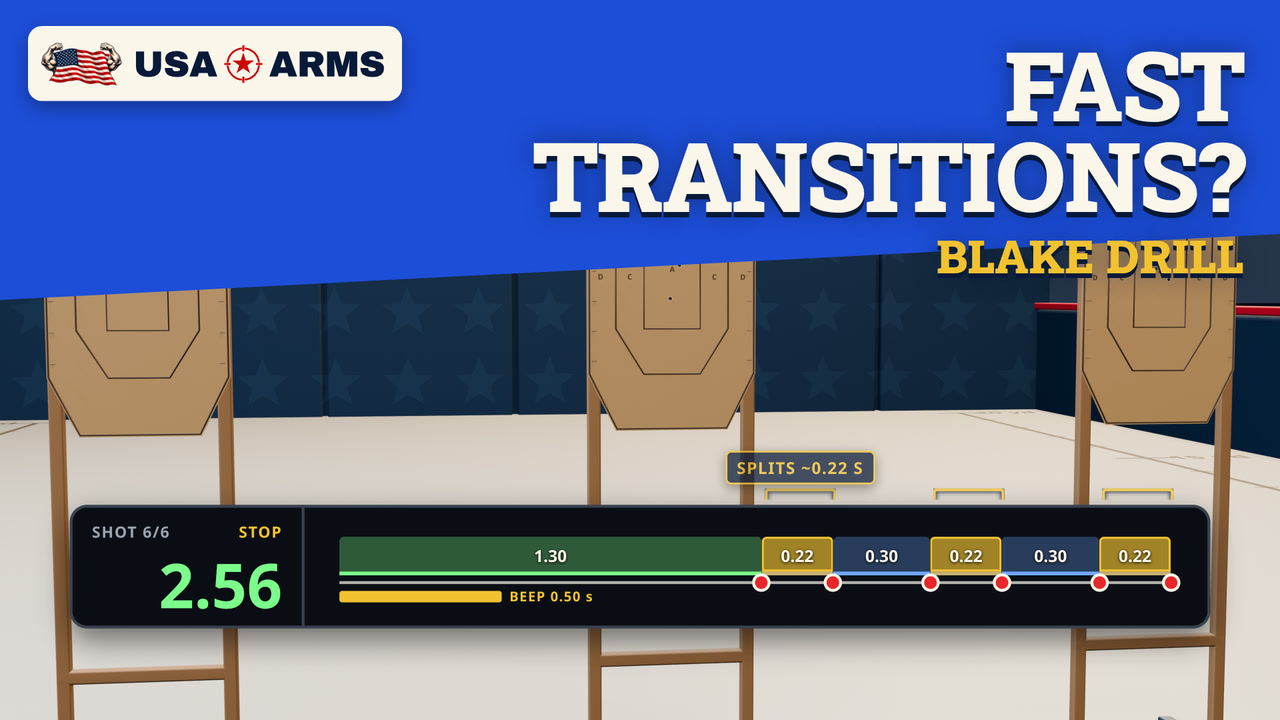 0:46
Two shots on each of three targets at seven yards. Ben Stoeger compares the six-shot Blake Drill with a Bill Drill to examine time spent changing targets.
- Illustrated distance
- 7 yards
- Rounds
- 6; two per target
- Intermediate Printable target Dot Torture
An untimed, fifty-round accuracy exercise on ten two-inch circles. The worksheet includes one-handed strings, target changes and reloads.
- Starting example
- 3 yards
- Rounds
- 50
- Beginner Printable target Pistol Group Shooting
An untimed pistol group shows how widely shots spread and where they land. Our printable target runs five-shot groups starting at three to five yards, then ten and twenty-five.
- Distances
- 3 to 5, 10, then 25 yards
- Group
- 5 shots
- Advanced Printable target 5-Yard Roundup
Justin Dyal’s ten-round test has four timed groups of shots at five yards. Each gets 2.5 seconds, with different round counts and hand-use conditions.
- Distance
- 5 yards
- Rounds
- 10
- Intermediate Casino Drill
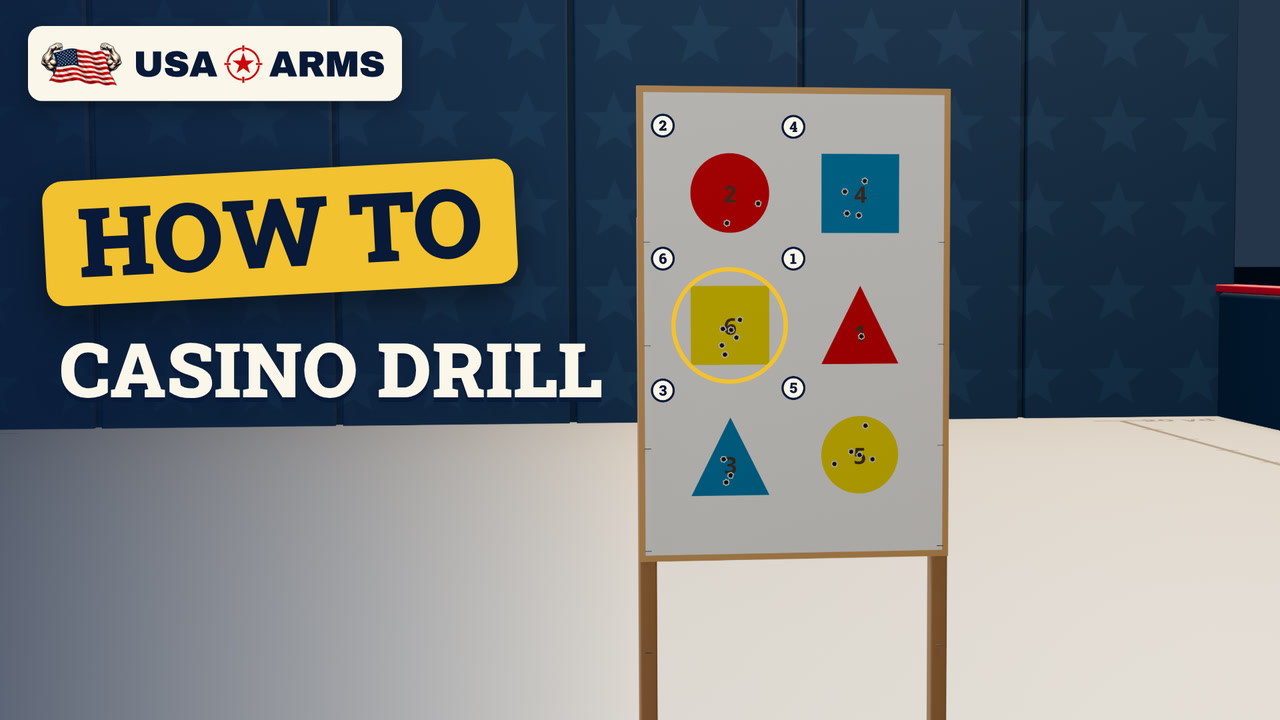 1:15
Six numbered shapes receive one through six shots, for twenty-one rounds. Tom Givens’ Casino Drill combines counting, target changes and two reloads.
- Published distance
- 5 yards
- Rounds
- 21
- Intermediate El Presidente
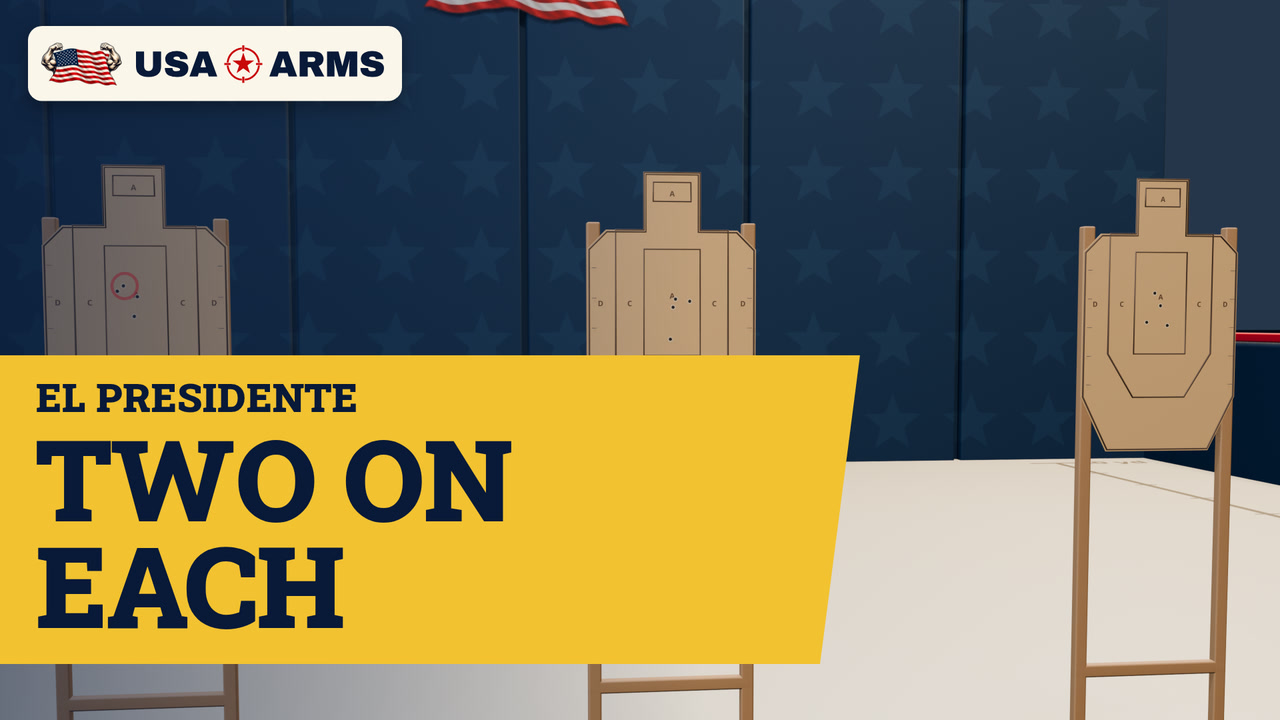 0:48
Twelve rounds on three targets, with a reload between two passes. Jeff Cooper’s exercise includes a facing-away start; published scoring methods differ.
- Rounds
- 12
- Targets
- Three
- Intermediate F.A.S.T. Drill
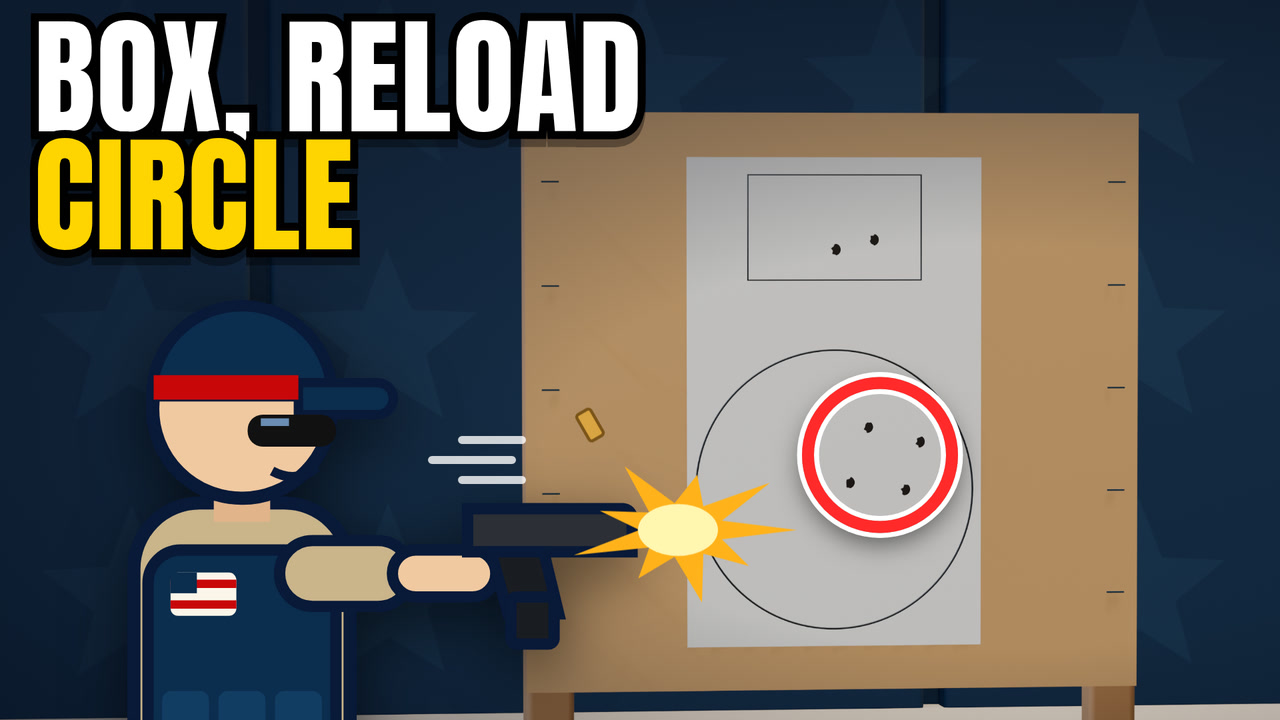 0:40
Todd Green’s six-round F.A.S.T. uses a 3×5-inch box and an eight-inch circle at seven yards, with a reload between the two groups.
- Distance
- 7 yards
- Rounds
- 6
- Beginner Printable target 5×5 Drill
Five shots in a five-inch circle, at five yards, within five seconds. Claude Werner’s version requires five successful strings in a row.
- Distance
- 5 yards
- Target area
- 5-inch circle
- Intermediate Printable target The Test / 10-10-10
Ten rounds at ten yards within ten seconds. The Test uses a B-8-style bullseye, but published versions differ in starting position and scoring.
- Distance
- 10 yards
- Rounds
- 10
- Advanced Hackathorn 3-Second Head-Shot Test
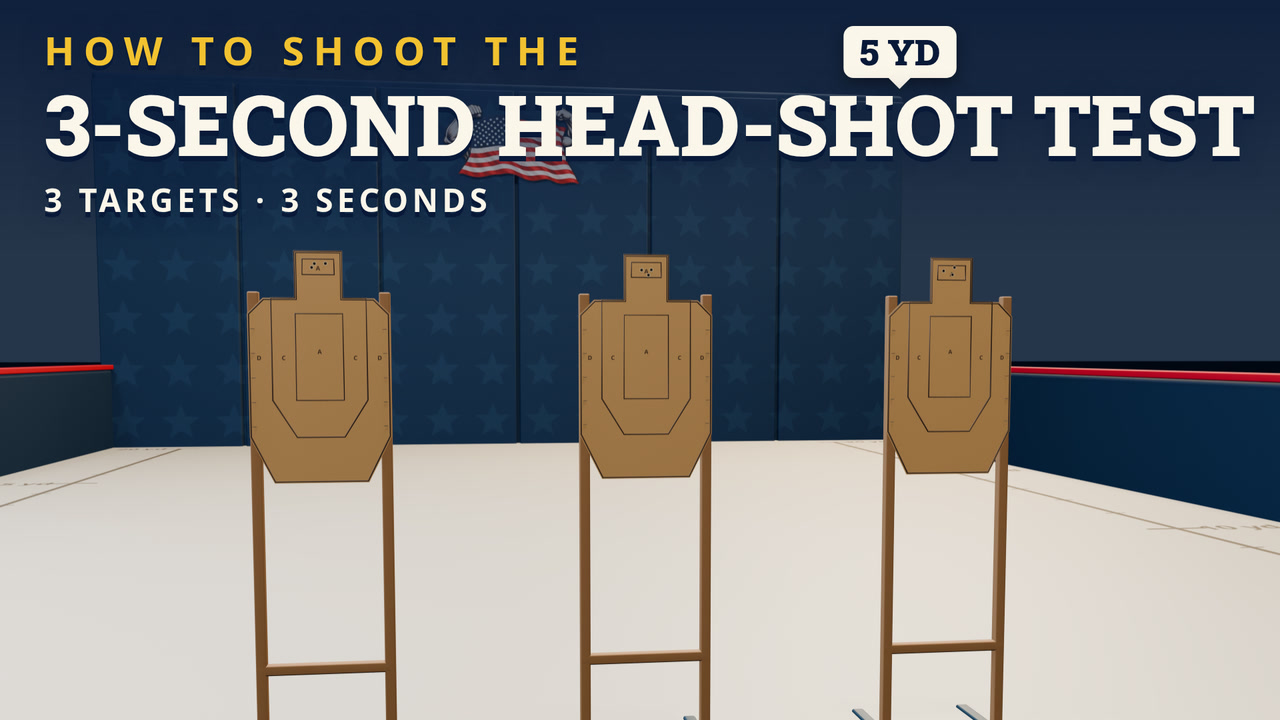 0:43
Nine rounds across three targets at five yards. Each three-shot string has a three-second limit and a different target order; the published minimum is seven hits.
- Distance
- 5 yards
- Rounds
- 9
- Advanced Printable target FBI Pistol Qualification: January 2019 Course
The January 2019 course uses fifty rounds in ten timed strings at 3 to 25 yards. This historical reference is not a statement of current FBI requirements.
- January 2019 account
- 50 rounds
- Distances
- 3, 5, 7, 15 and 25 yards
- Intermediate Mozambique / Failure Drill
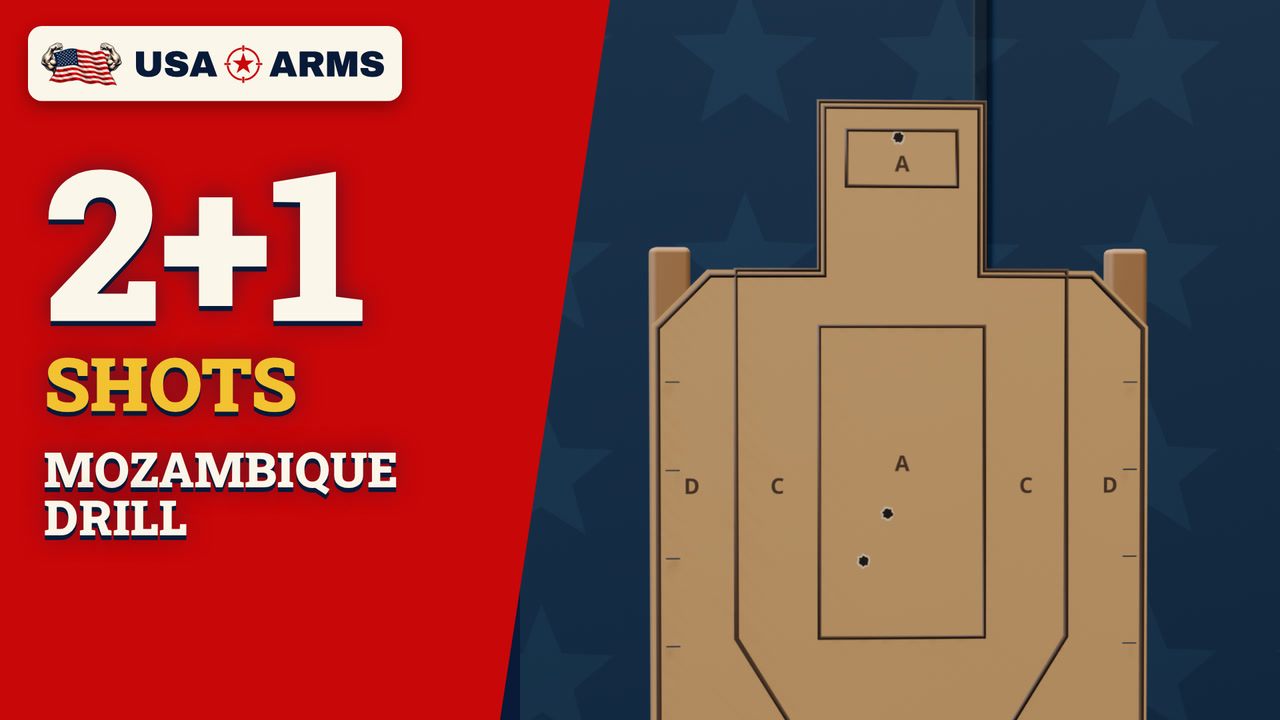 0:49
A three-round paper-target sequence: two hits in the larger body area, then one in the smaller upper area.
- Illustrated rounds
- 3
- Pattern
- Two, then one
- Beginner Printable target Red Dot Pistol Zero
Our printable sheet for zeroing a red dot on a pistol: two small targets at seven yards to get close, then a large target at fifteen yards to confirm. One sheet is for a 25-yard zero, the other for a 15-yard zero.
- Get close
- 7 yards, two small targets
- Confirm
- 15 yards, one large target
How to read a drill reference
Each drill here describes a published exercise. It is not a practice plan or firearms instruction; an instructor provides instruction for your circumstances.
- Purpose
- The author’s stated purpose for the exercise.
- Published version
- The source and version described; similarly named exercises may use different conditions.
- Scoring or observation
- A source may report a score, time, or observation, not necessarily a pass/fail standard.
- Limits
- A result applies to its stated conditions. It is not a USA Arms proficiency certificate or clearance for another activity.
Three references to read
These are the authors’ descriptions, not a difficulty order or a sequence to follow.
Wall drill
George Harris calls the wall drill “a foundation to all shooting” in his demonstration. His published account describes developing it to keep his attention on the sights.
Group shooting
Ben Stoeger describes group shooting as something people do “early on in your shooting career” and continue afterward. He discusses consistency and equipment checks, and treats a group’s spread and its placement as separate questions. He distinguishes untimed groups from accuracy under time pressure: a result in one does not establish the other.
Ball and dummy
A U.S. Army account describes instructors using dummy rounds during live-fire training to observe shooting technique. The contrast between live and inert rounds belongs to that instructor-led setting.
This is not dry-fire. It appears here only as an instructor-led observation reference, with no loading or administering instructions.
Find a range or instructor
New to the range? Plan your first visit.